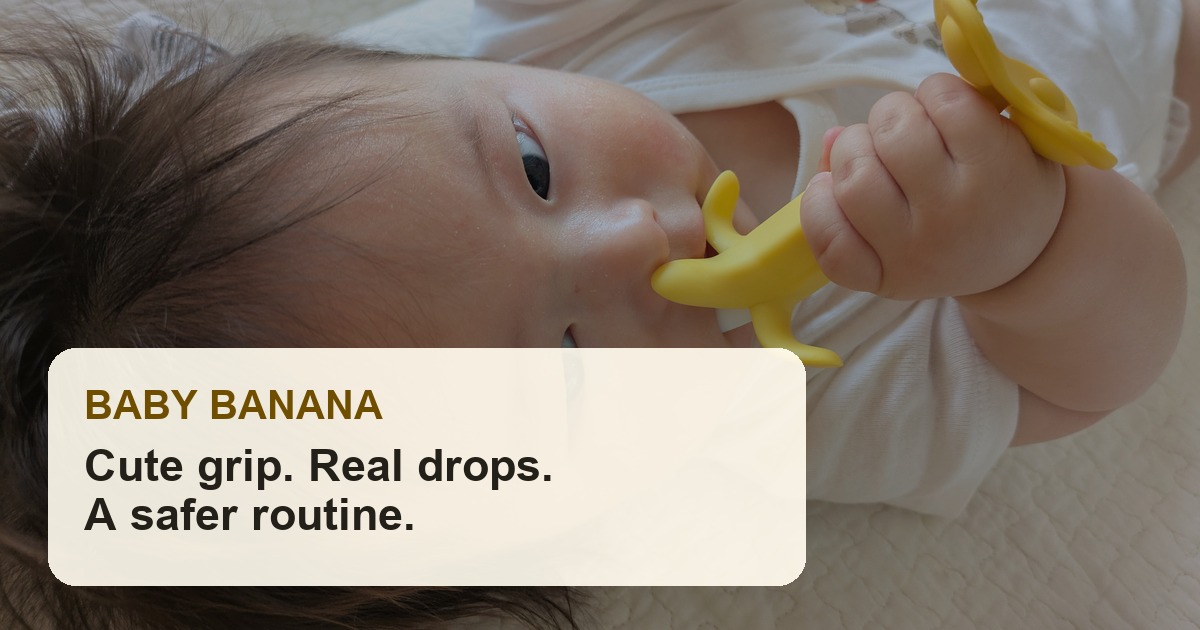
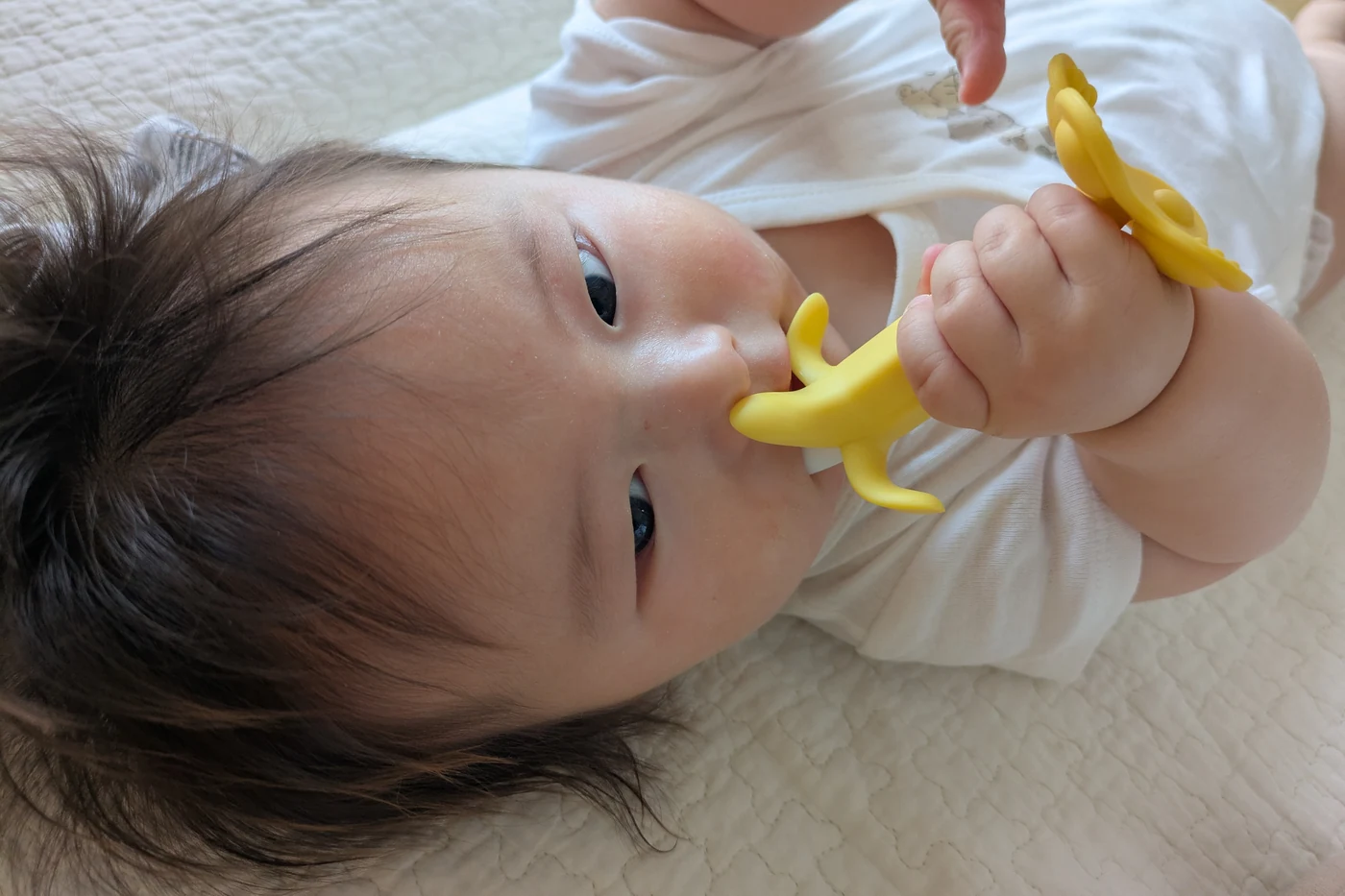
The first thing we noticed was the shape. Put this bright yellow banana in a baby’s hands and the whole scene becomes almost comically cute—like a tiny monkey enjoying a snack. The second thing we noticed was much less photogenic: our baby liked to throw it.
That combination is the honest story behind our Baby Banana infant toothbrush experience. The soft silicone design was easy for our baby to grip and mouth during supervised play, but it did not magically stay off the floor. This review explains what worked in our Japanese home, what the photos can actually prove, and how U.S. parents can build a simpler, safer drop-and-clean routine.
Quick answer: The Baby Banana is worth considering if you want a flexible, easy-grip teether and training toothbrush for a young baby. Its biggest practical drawback in our home was frequent dropping. Supervision, inspection, and cleaning matter more than trying to tether it at all costs.
What this banana-shaped product actually is
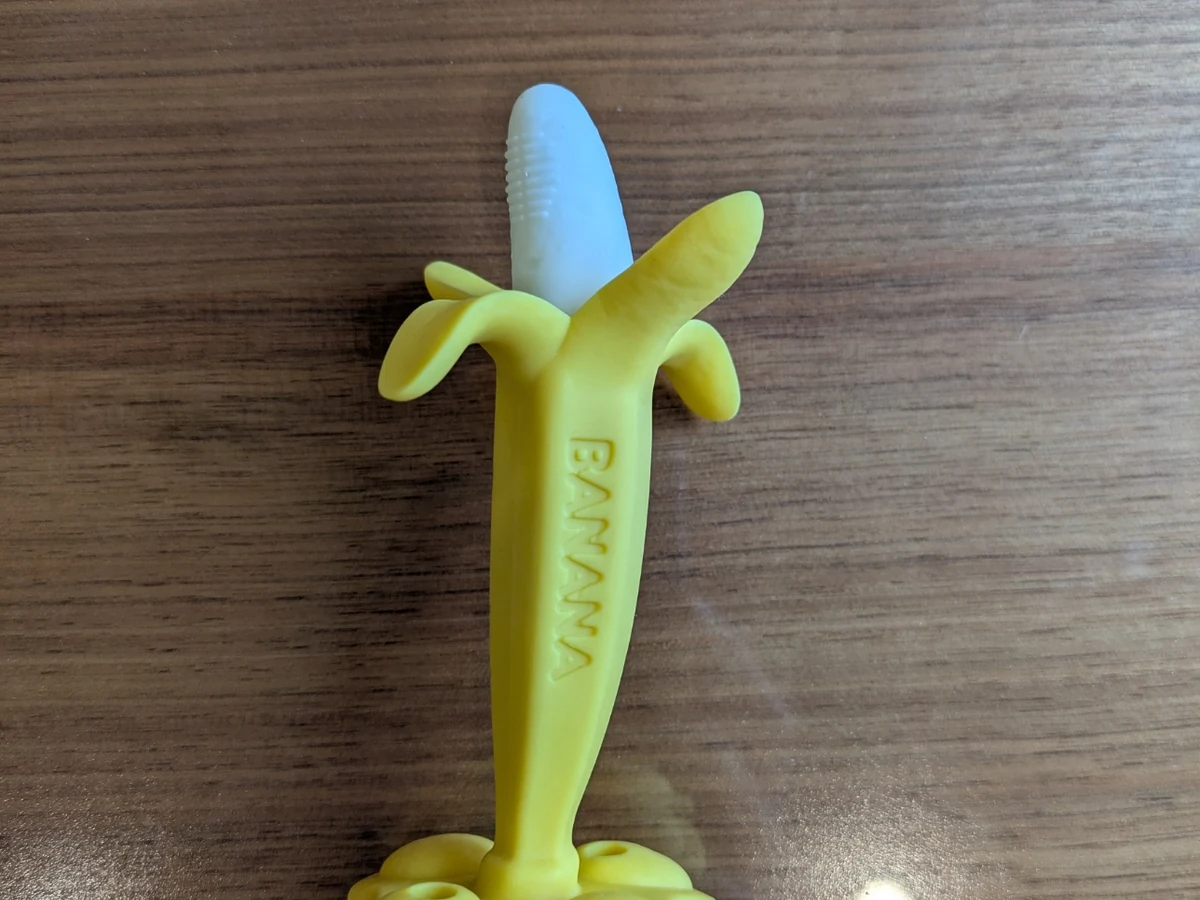
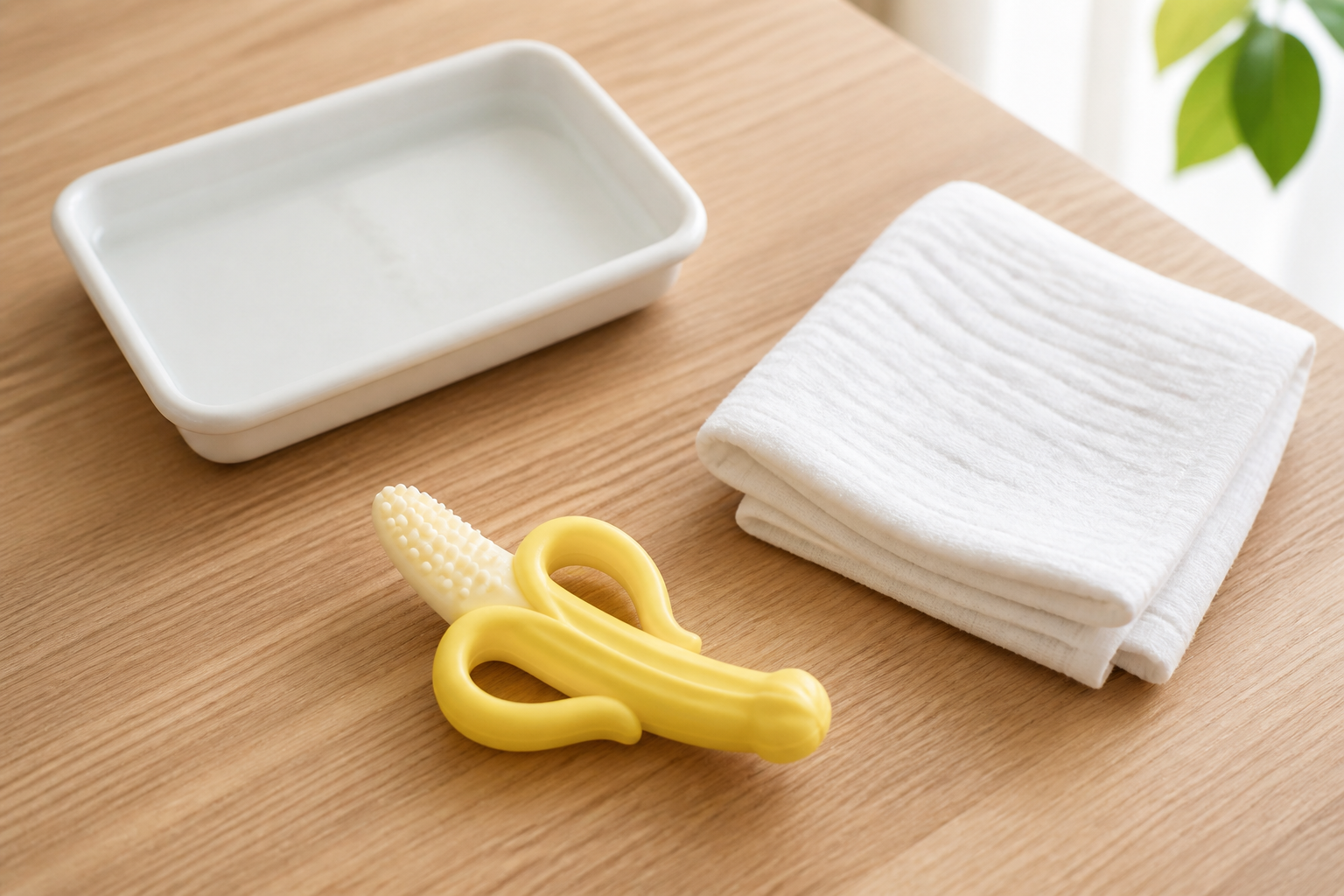
The product in our photos has the raised word “BANANA,” a yellow peel-shaped handle, and a white silicone bristle tip. Those details match the Baby Banana Infant Toothbrush, model BR003. The manufacturer describes BR003 as a flexible, food-grade silicone infant toothbrush with easy-grip handles, intended for ages 3–12 months. It also says the product is dishwasher and freezer safe.
We do not have the original packaging or purchase record in the article materials, so we are treating BR003 as a highly likely identification—not pretending that a photograph is a receipt.
The manufacturer markets it as both an early toothbrush and a gum-massaging teether. We think “training toothbrush and teether” is the clearest description. It can help a baby become familiar with holding a brush-like object, but it should not automatically replace the oral-care routine recommended by your child’s pediatrician or dentist.
What worked in our home
The peel handles were genuinely easy to grab
In our real photos, our baby holds the banana with both hands and brings the white end to the mouth without an adult positioning every movement. That is useful evidence of grip—not proof that every baby will like it.
The flexible peel sections create several places for small hands to grasp. Compared with a plain ring, the shape also made it easy for us to see which end our baby was mouthing.
The little-monkey moment was real
This was the fun part. With a yellow banana shape sticking out of the mouth, our baby looked like a tiny monkey. Our family got plenty of “so cute” moments from it.
That may sound superficial, but a product parents enjoy offering is more likely to become part of a calm routine. Cute is not a safety feature, though, so we keep that observation separate from claims about comfort or development.
The downside: it was tossed often
Our baby dropped or threw it repeatedly. That meant picking it up, deciding whether it needed washing, and occasionally losing track of it during a busy moment.
This is where our expectation changed. We stopped looking for a way to guarantee zero drops and focused on a routine we could repeat:
- Offer it only during a short, supervised session.
- Check the silicone and bristles before use.
- If it lands on the floor, set it aside for cleaning.
- Keep a clean tray or backup teether nearby when practical.
That routine is less clever than an elaborate tether. It is also easier to understand.
A safer use-and-clean routine
Stay close while it is in the mouth
Our human note for this article was simple: do not look away while the baby is mouthing it. The manufacturer’s age guidance does not remove the need for active supervision. Babies can move, roll, or push objects in unexpected ways.
Use the product only in a stable, awake setting. Do not leave it loose in a crib or other sleep space.
Inspect before and after use
Look over the bristles, handle, and thin flexible areas. If you see tearing, cracking, sticky deterioration, missing material, or any other damage, stop using it. “It still looks mostly fine” is not a useful standard for an object that goes into a baby’s mouth.
Follow the manufacturer’s cleaning directions
The official BR003 page says it is dishwasher safe. Follow the instructions supplied with your specific product, especially if your packaging differs from the current model. Clean after floor drops and let it dry in a clean place.
Should you attach a clip or strap?
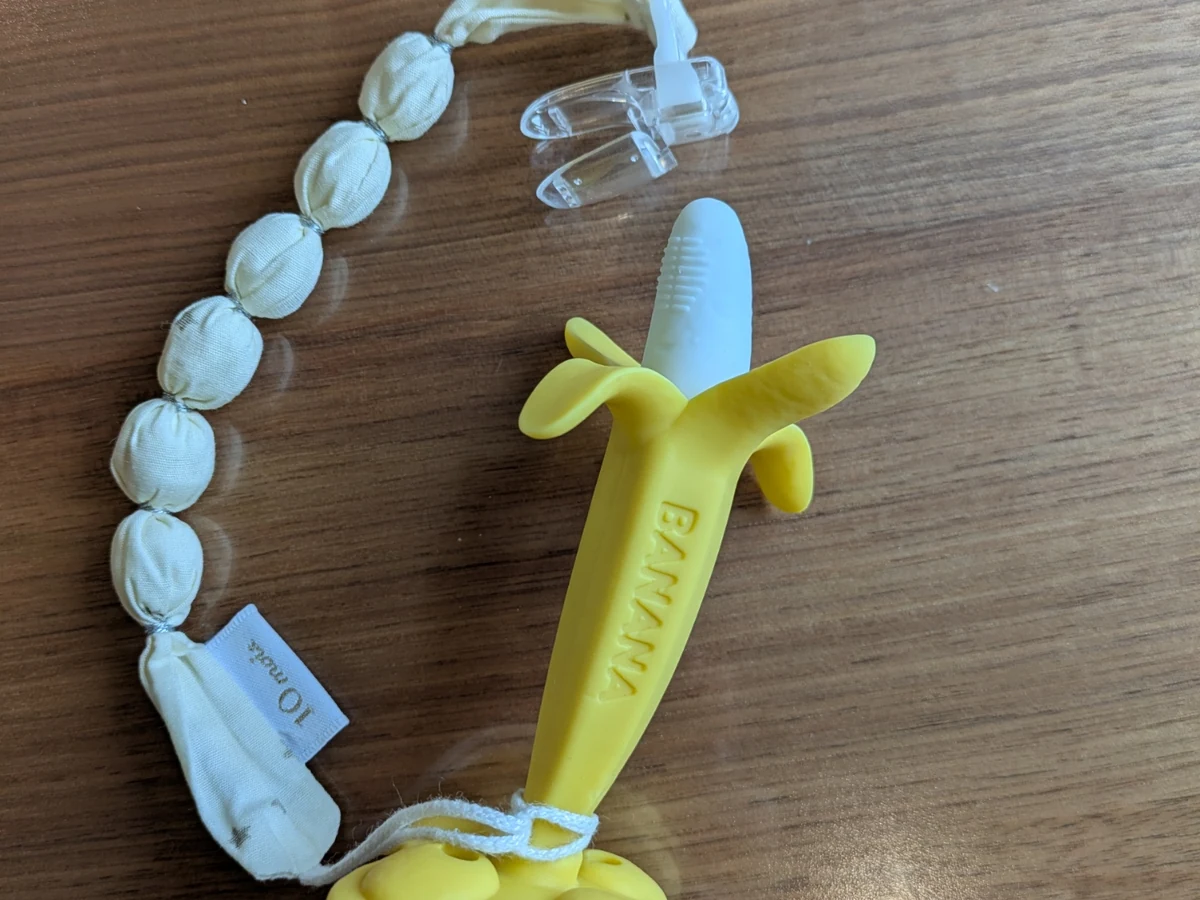
We used a fabric clip in our home because the banana was thrown so often. The photos document that choice; they do not prove the accessory meets U.S. requirements or is safe in every situation. Its brand, total length, and testing status are unknown.
The U.S. Consumer Product Safety Commission warns never to tie a pacifier around a child’s neck and says strings and cords can create strangulation hazards. Its business guidance also notes that pacifier/teether clips are subject to children’s product safety requirements and recommends that a clip be no longer than necessary to function.
For that reason, our article does not recommend copying the pictured fabric strap. Never place a cord around a baby’s neck, never use a tether during sleep, and never attach one in a crib or play yard. Keep all cord-like accessories away when direct adult supervision ends.
The selected U.S. alternative in this article is LittleHugs Toy Straps (ASIN B0CKPK1NPX). We have not used it. It is included only as a commercially available comparison selected by the human editor. Check the current Amazon listing, warnings, length, attachment instructions, and recall status before buying or using it. A toy strap is not permission to leave a baby unattended.
How it compares with another easy-grip silicone teether
The selected comparison product is the Comotomo Silicone Baby Teether (ASIN B01JAA8M2I). We have not used it, so this is a feature comparison, not a personal review.
| Product | Shape and grip | Best fit | What to verify |
|---|---|---|---|
| Baby Banana BR003 | Banana peel handles plus brush-like tip | Parents wanting a teether/training-brush combination | Packaging, age guidance, condition, current care instructions |
| Comotomo Silicone Teether | Ring body with finger-like chewing points | Parents wanting a dedicated easy-grip silicone teether | Current listing, age guidance, care instructions, recall status |
| LittleHugs Toy Straps | Adjustable silicone tether accessory | A possible drop-management accessory, not a teether | Length, attachment, warnings, testing, and whether use is appropriate |
Comotomo’s official page says its teether is made from food-contact-grade silicone, is recommended for ages 3 months and older, and can be cleaned in a dishwasher or sterilizer. Its shape may appeal to babies who prefer finger-like chewing points. Baby Banana makes more sense if the brush-like form is part of what you want.
Who may like Baby Banana—and who may prefer another shape
Baby Banana may suit your family if:
- your baby can already grasp and mouth age-appropriate teethers;
- you want a flexible training toothbrush/teether combination;
- you are comfortable supervising, inspecting, and washing it regularly;
- the cheerful shape makes the routine easier to enjoy.
Consider another option if:
- your baby consistently rejects the brush-like tip;
- you want a dedicated ring or wrist-hugging teether;
- frequent drops make the product impractical for your setting;
- your child is outside the manufacturer’s recommended age or developmental fit.
FAQ
Can Baby Banana replace a regular toothbrush?
Do not assume it is a complete replacement. It is a training toothbrush and teether. Ask your child’s dentist or pediatrician what brushing routine and fluoride toothpaste amount are appropriate for your child’s age and teeth.
Can it go in the refrigerator or freezer?
The current BR003 manufacturer page says it is freezer safe. Follow the instructions for the exact product you own. The American Academy of Pediatrics recommends firm rubber teethers and cautions that frozen items can become too hard, so avoid improvising beyond manufacturer directions.
How often should I inspect it?
Before and after each use is a simple rule. Inspection takes seconds and is especially important after prolonged chewing, dishwasher cycles, or any visible change.
What should I do after it hits the floor?
Set it aside, clean it according to the manufacturer’s directions, and let it dry in a clean place. Trying to prevent every drop with a long cord can introduce a more serious hazard than the inconvenience you are solving.
Final takeaway
Our Baby Banana experience was both adorable and ordinary: our baby could grip it, looked ridiculously cute, and threw it on the floor many times. The product’s flexible handles and brush-like tip made it useful in our supervised routine. The recurring drops taught us the more valuable lesson.
You do not need a perfect anti-drop system. You need a short supervised session, a quick inspection, a repeatable cleaning plan, and a firm rule that cords never go around a baby’s neck or into a sleep space.
If that routine fits your family, Baby Banana BR003 is worth considering. If you prefer a dedicated teether shape, compare it with Comotomo. Any accessory—including LittleHugs Toy Straps—should be treated as an untested-by-us comparison and used only after checking the current instructions and safety information.
Affiliate disclosure: This article contains affiliate links. If you buy through them, Yama Family Japan may earn a commission at no additional cost to you. We only describe personal use where the human-provided experience and photographs support it.